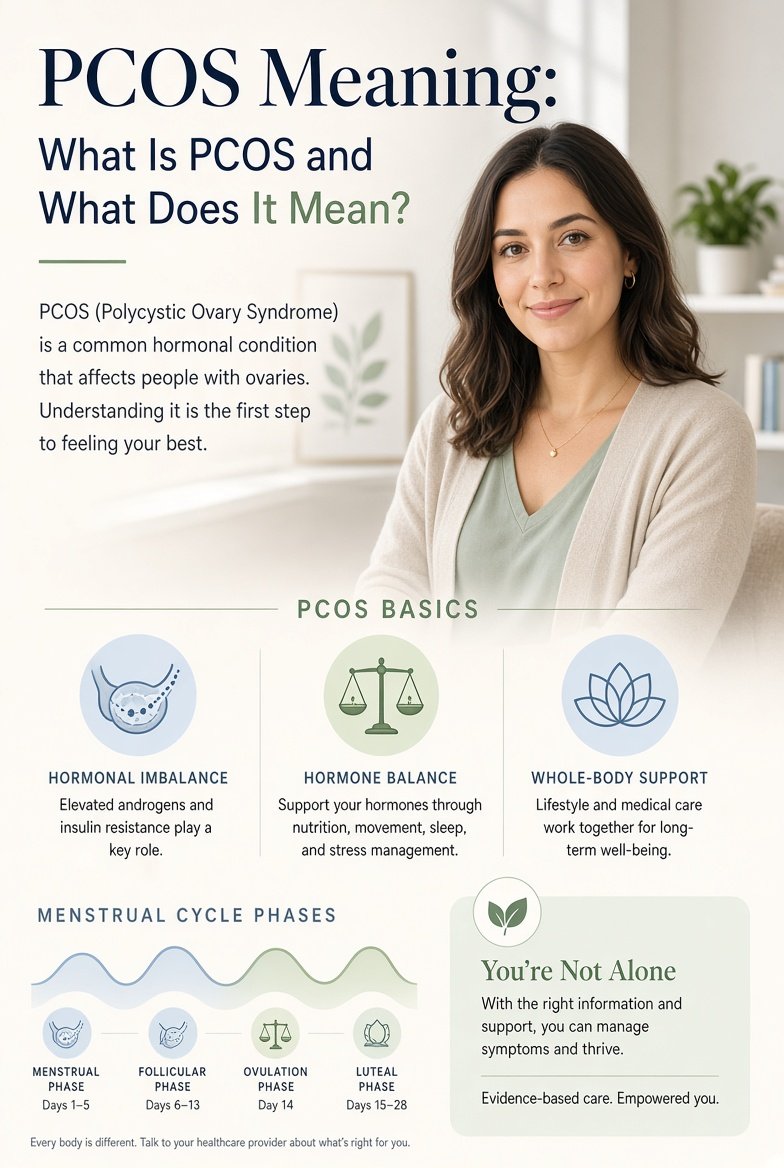
If you have searched for PCOS meaning, you may have seen the term in a medical article, social media post, health report, or conversation about hormones and reproductive health. PCOS stands for polycystic ovary syndrome, a common hormonal condition that can affect the ovaries, menstrual cycle, metabolism, and the body’s hormone balance.
In simple English, PCOS means a health condition in which hormonal changes can affect how the ovaries work. It may cause irregular periods, higher levels of certain hormones called androgens, acne, increased facial or body hair, and difficulty with ovulation. However, PCOS does not look the same in everyone. Some people have several symptoms, while others have only a few.
Understanding the PCOS meaning is useful because the term is often misunderstood. Despite its name, having PCOS does not necessarily mean that a person has ovarian cysts. The condition is diagnosed using a combination of symptoms, medical history, examination, and sometimes laboratory tests or ultrasound.
What Does PCOS Mean?
PCOS stands for Polycystic Ovary Syndrome. It is a hormonal and metabolic condition that commonly affects people who have ovaries and are in their reproductive years.
The word can be broken into three parts. Poly means many, cystic relates to cyst-like structures, and ovary refers to the reproductive organs that release eggs. However, the name can be misleading because ovarian cysts are not required for someone to have PCOS.
PCOS is mainly associated with problems involving hormone regulation and ovulation. People with PCOS may produce higher-than-usual amounts of androgens, sometimes called male hormones, although these hormones are naturally present in everyone. PCOS can also be associated with insulin resistance and changes in the menstrual cycle.
The full term is pronounced approximately as “pol-ee-SIS-tik OH-vuh-ree SIN-drohm.”
What Is the Full Form of PCOS?
The full form of PCOS is Polycystic Ovary Syndrome.
Here is what each word means:
| Word | Simple meaning |
| Polycystic | Related to having multiple small fluid-filled structures or cyst-like areas |
| Ovary | A reproductive organ that stores and releases eggs |
| Syndrome | A group of signs and symptoms that commonly occur together |
Although “polycystic” is part of the name, PCOS is not simply a condition involving ovarian cysts. Some people with PCOS may have ovaries with many small follicles, while others may not have this appearance.
That is one reason the full PCOS meaning is more complicated than the name alone suggests.
PCOS Meaning in Simple English
In very simple English, PCOS is a condition that affects hormone balance and the way the ovaries function.
A person with PCOS may have problems with regular ovulation. This can lead to irregular menstrual periods. The condition may also cause higher androgen levels, which can contribute to acne or increased facial and body hair.
PCOS can also affect the body’s response to insulin. Insulin is a hormone that helps the body use glucose for energy. When the body does not respond to insulin effectively, it is called insulin resistance. This can occur with PCOS and may increase the risk of developing type 2 diabetes over time.
The important thing to remember is that PCOS is not one single symptom. It is a condition involving several possible hormonal and metabolic features.
What Is the Origin of the Term PCOS?
The modern medical term polycystic ovary syndrome developed from medical observations of ovarian and hormonal patterns. The condition was historically described using different names, including Stein-Leventhal syndrome, after physicians Irving Stein and Michael Leventhal, who published an influential description of the condition in the twentieth century.
The term “polycystic ovary syndrome” became widely used because certain affected ovaries can show multiple small follicles on imaging. However, medical understanding has changed significantly over time.
Today, doctors recognize that PCOS is not simply an ovarian condition. It can involve reproductive hormones, metabolism, insulin regulation, and other aspects of health. This broader understanding explains why two people with PCOS can have very different symptoms.
What Are the Common Symptoms of PCOS?
PCOS symptoms vary considerably from person to person. Some people notice menstrual changes first, while others may seek medical advice because of acne, unwanted hair growth, fertility concerns, or other symptoms.
Irregular Periods
Irregular menstrual cycles are one of the most commonly recognized features of PCOS.
Some people may have periods that occur less frequently than expected, while others may have unpredictable bleeding. Irregular periods can happen because ovulation is not occurring regularly.
However, irregular periods do not automatically mean someone has PCOS. Stress, changes in weight, certain medications, thyroid conditions, eating patterns, and other health issues can also affect menstrual cycles.
Higher Androgen Levels
PCOS can involve higher-than-usual levels or effects of androgens.
Androgens are hormones that everyone produces, although the amounts differ. When androgen activity is elevated, it can contribute to symptoms such as acne, increased facial or body hair, or scalp hair thinning.
Not everyone with PCOS experiences these symptoms.
Acne
Hormonal changes associated with PCOS can contribute to persistent or difficult-to-manage acne.
Acne by itself does not mean someone has PCOS. It is common for many reasons, particularly during adolescence and young adulthood. A healthcare professional considers acne alongside other symptoms and medical information when evaluating possible PCOS.
Increased Facial or Body Hair
Some people with PCOS experience increased growth of coarse hair on areas such as the face, chest, or abdomen.
This symptom is sometimes called hirsutism. It can be associated with increased androgen activity.
Hair growth patterns vary naturally between individuals, so this symptom should be considered in the context of other signs rather than used alone to identify PCOS.
Difficulty With Ovulation
PCOS can interfere with regular ovulation.
Ovulation is the release of an egg from an ovary. When ovulation happens irregularly, it can make pregnancy more difficult for some people.
Importantly, having PCOS does not mean that pregnancy is impossible. Many people with PCOS become pregnant, sometimes naturally and sometimes with medical assistance.
Metabolic Changes
PCOS can also be associated with metabolic changes, including insulin resistance.
This is one reason healthcare professionals may consider blood glucose, cholesterol, blood pressure, and other health factors when evaluating someone with PCOS.
Does PCOS Mean You Have Ovarian Cysts?
No. This is one of the most important points about the PCOS meaning.
The name can make people think that every person with PCOS must have ovarian cysts. That is not correct.
The ovaries of some people with PCOS may contain many small follicles that can appear on an ultrasound. These follicles are not necessarily traditional ovarian cysts.
A person can also meet the criteria for PCOS without having a polycystic appearance of the ovaries on an ultrasound. This is why doctors consider multiple factors rather than relying on an ultrasound alone.
What Causes PCOS?
The exact cause of PCOS is not completely understood. Researchers believe that genetics, hormones, metabolism, and other biological factors can all contribute.
Genetics
PCOS can run in families. If close relatives have PCOS, a person may have a higher likelihood of developing it.
However, having a family history does not guarantee that someone will develop PCOS.
Hormonal Factors
Hormonal changes are central to PCOS.
Some people with PCOS have higher androgen levels or altered hormone signaling. These changes can affect ovulation and contribute to symptoms such as acne or increased hair growth.
Insulin Resistance
Insulin resistance is commonly associated with PCOS.
When the body does not respond effectively to insulin, the pancreas may produce more insulin to compensate. Higher insulin levels can influence ovarian hormone production in some people.
It is important not to assume that everyone with PCOS has insulin resistance. PCOS is a varied condition, and metabolic features differ between individuals.
How Is PCOS Diagnosed?
There is no single test that confirms PCOS in every case.
Healthcare professionals generally consider a person’s symptoms, medical history, physical examination, laboratory tests, and sometimes ultrasound findings. Other conditions that can cause similar symptoms may also need to be ruled out.
A commonly used diagnostic approach considers three broad features:
- Irregular or absent ovulation
- Evidence of increased androgen activity
- Polycystic ovarian appearance on ultrasound
A person does not necessarily need all three features to be diagnosed with PCOS. The exact diagnostic criteria can vary depending on age and clinical guidelines.
For teenagers, diagnosis can be particularly careful because menstrual irregularity and acne can be normal parts of puberty. A healthcare professional should interpret symptoms in the context of a person’s stage of development.
PCOS Treatment and Management
There is no single treatment that works for every person with PCOS. Management depends on symptoms, health goals, age, medical history, and whether the person is trying to become pregnant.
Doctors may recommend approaches aimed at regulating menstrual cycles, managing acne or excess hair, improving metabolic health, or supporting ovulation when pregnancy is desired.
Lifestyle habits can also be part of PCOS management. Regular physical activity, adequate sleep, balanced nutrition, and other healthy routines may support overall metabolic and hormonal health.
It is important to avoid extreme diets or restrictive eating plans. PCOS management should focus on sustainable health rather than unrealistic body standards.
PCOS and Fertility
One common question about PCOS is whether it affects fertility.
PCOS can make conception more difficult because irregular ovulation means an egg may not be released regularly. However, PCOS does not automatically mean infertility.
Many people with PCOS can become pregnant. When pregnancy is desired, healthcare professionals can evaluate ovulation and recommend appropriate treatment if necessary.
The best approach depends on the individual’s circumstances. Someone who has concerns about fertility should discuss them with a qualified healthcare professional rather than assuming that PCOS makes pregnancy impossible.
Examples of PCOS in Everyday Sentences
Learning examples can make the PCOS meaning easier to understand.
Example:
“Her doctor explained that PCOS can affect hormone levels and menstrual cycles.”
Example:
“PCOS may cause irregular periods in some people.”
Example:
“She researched PCOS meaning after her healthcare provider mentioned the condition.”
Example:
“PCOS can affect different people in different ways.”
Example:
“Having PCOS does not necessarily mean that a person has ovarian cysts.”
Example:
“Her healthcare professional explained that PCOS can be managed with individualized treatment.”
These examples show how the term is normally used in medical and everyday conversations.
PCOS Synonyms and Related Terms
PCOS does not have a perfect synonym because it is the specific name of a medical syndrome.
However, several related terms may appear in health information:
- Polycystic ovary syndrome
- PCO syndrome
- Stein-Leventhal syndrome
- Polycystic ovarian syndrome
- Hormonal disorder — a broader description, not an exact synonym
- Reproductive endocrine disorder — a broader medical category
The term Stein-Leventhal syndrome is an older name and is less commonly used today.
It is better to use PCOS or polycystic ovary syndrome when discussing the condition in modern medical contexts.
PCOS Antonyms
There is no direct antonym for PCOS because it is the name of a specific medical condition.
However, concepts that contrast with some features associated with PCOS may include:
- Regular ovulation
- Regular menstrual cycles
- Typical androgen levels
- Normal hormonal regulation
- No polycystic ovarian features
These are conceptual contrasts, not true medical antonyms.
For example, “regular menstrual cycle” is not an antonym of PCOS because someone can have PCOS and still have regular periods.
Common Usage of PCOS
The abbreviation PCOS is extremely common in health, medical, fertility, and reproductive-health discussions.
Common phrases include:
- PCOS meaning
- PCOS symptoms
- PCOS causes
- PCOS treatment
- PCOS diet
- PCOS and fertility
- PCOS and irregular periods
- PCOS hormone imbalance
- PCOS diagnosis
- PCOS management
- PCOS and insulin resistance
People may also search questions such as “What does PCOS mean?” or “What is PCOS in simple words?”
These searches generally reflect a desire to understand the condition without complicated medical terminology.
What Is the Difference Between PCOS and PCOD?
PCOS and PCOD, or polycystic ovarian disease, are terms that are sometimes used interchangeably in everyday conversations, but they are not always used in exactly the same way.
PCOS is the widely recognized medical term for polycystic ovary syndrome. It describes a broader hormonal and metabolic condition.
PCOD is a term commonly used in some regions to describe ovarian or hormonal changes involving multiple follicles. Medical terminology and diagnostic practices can differ, so it is useful to ask a healthcare professional what a specific diagnosis means.
When reading health information, PCOS is generally the more standardized term in current medical guidance.
Is PCOS Common?
Yes. PCOS is considered one of the most common hormonal conditions affecting people of reproductive age.
However, estimates of how common it is can vary because different studies and diagnostic criteria identify different groups of people.
Some people may have PCOS for years without realizing it, particularly when symptoms are mild or attributed to other causes.
Awareness of the condition has increased, making searches for PCOS meaning, symptoms, diagnosis, and treatment increasingly common.
PCOS and Mental Well-Being
Living with a chronic health condition can affect emotional well-being.
People with PCOS may feel frustrated by unpredictable periods, acne, hair changes, fertility concerns, or the uncertainty that can come with managing a long-term condition.
This does not mean that PCOS causes the same emotional experience for everyone. However, emotional health deserves attention alongside physical symptoms.
If someone is struggling emotionally, talking with a trusted adult, healthcare professional, counselor, or another appropriate support person can be helpful.
Frequently Asked Questions About PCOS Meaning
What does PCOS stand for?
PCOS stands for polycystic ovary syndrome. It is a hormonal and metabolic condition associated with irregular ovulation, androgen-related symptoms, and sometimes a polycystic appearance of the ovaries.
What is the PCOS meaning in simple words?
In simple words, PCOS is a condition that can affect hormone balance and ovarian function. It may cause irregular periods, acne, increased facial or body hair, and problems with regular ovulation.
How do you pronounce PCOS?
PCOS is usually pronounced by saying each letter: “pee-see-oh-ess.”
Does PCOS mean you have cysts?
No. Despite the name, ovarian cysts are not required for a person to have PCOS. Some people with PCOS have many small follicles visible on an ultrasound, while others do not.
Can PCOS affect periods?
Yes. PCOS can cause periods to become irregular, infrequent, or unpredictable because ovulation may not occur regularly.
Can someone with PCOS get pregnant?
Yes. PCOS can make ovulation less regular and may make conception more difficult for some people, but it does not automatically mean infertility.
Is PCOS a lifelong condition?
PCOS is generally considered a long-term condition. Symptoms can change over time, and treatment focuses on managing individual symptoms and supporting overall health.
Can teenagers have PCOS?
Yes, PCOS can be diagnosed in adolescents, but diagnosis requires particular care because some changes associated with puberty can resemble PCOS symptoms. A qualified healthcare professional should assess persistent or concerning symptoms.
Is PCOS caused by being overweight?
No. PCOS is not simply caused by body weight. People with different body types can have PCOS. Weight can influence certain metabolic features, but it should not be used to determine whether someone has the condition.
Can PCOS be cured?
There is currently no single cure that permanently eliminates PCOS. However, symptoms can often be managed through individualized medical care and healthy lifestyle habits.
Final Thoughts on PCOS Meaning
The PCOS meaning is polycystic ovary syndrome, a common hormonal and metabolic condition that can affect ovarian function, menstrual cycles, androgen levels, and metabolism.
The condition can look different from one person to another. Some people may mainly experience irregular periods, while others may notice acne, increased hair growth, difficulty with ovulation, or metabolic changes. Having PCOS also does not automatically mean having ovarian cysts or being unable to become pregnant.
Understanding PCOS starts with understanding that it is more than a single symptom. If someone experiences persistent irregular periods, unusual hormonal symptoms, or concerns related to ovulation or reproductive health, a qualified healthcare professional can provide appropriate evaluation and guidance.
Most importantly, PCOS is a medical condition, not a personal failure. With accurate information, appropriate medical care, and supportive health habits, people with PCOS can manage their symptoms and look after their long-term well-being.